- Hablamos Español

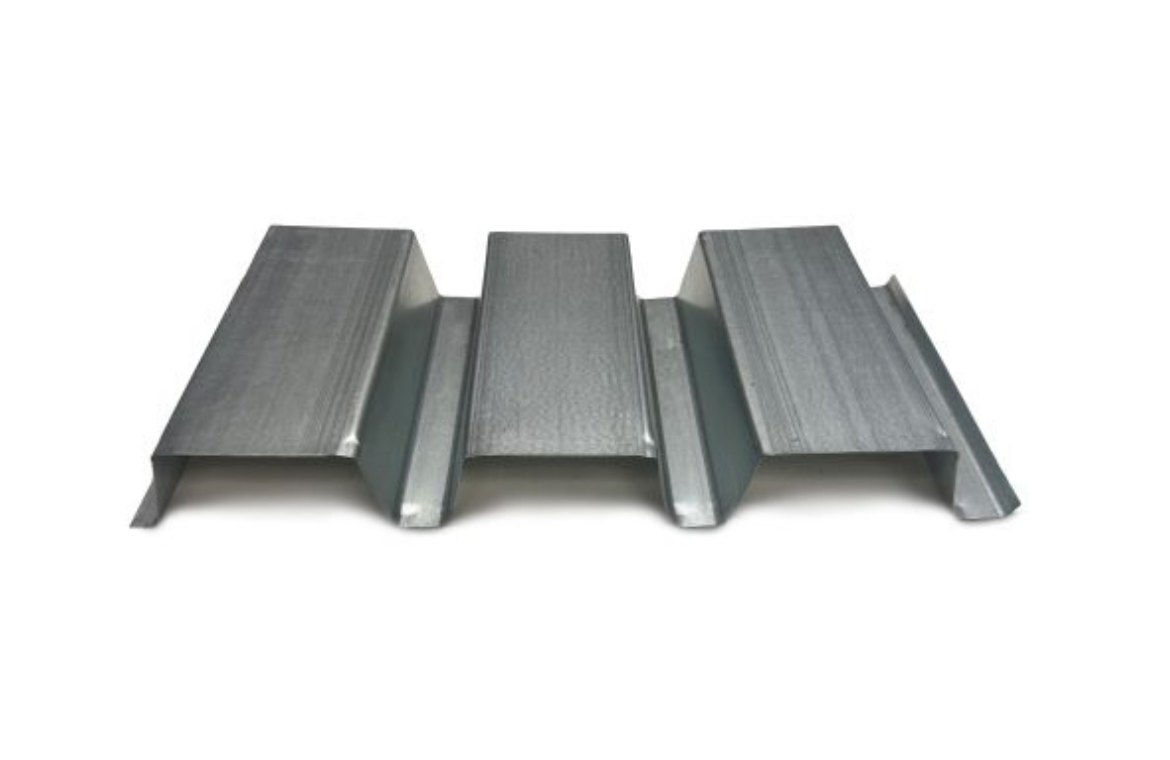
N Deck Profiles and When They Are Used
During my conversation with Ryan from Marlyn Steel Decks, we spent a good amount of time talking about roof decks, specifically when projects move beyond B-Deck and why N-Deck becomes necessary. What stood out most is that N-Deck isn’t about preference; it’s about span, load, and performance.
Even though it may look similar to other profiles, N-Deck is designed to handle conditions that lighter decks simply can’t.
What is an N-Deck?
An n deck is a deeper steel roof deck profile designed to span longer distances between supports than lighter decks like B-Deck. As Ryan explained, N-Deck is typically used when spans approach or exceed ten feet, where a standard deck may no longer meet load requirements. Its deeper profile allows it to handle greater structural demands while maintaining performance within engineered limits.
An n deck is typically needed when a project requires longer spans between supports than a standard deck can safely handle. As Ryan explained during our conversation, once spans begin approaching ten feet or more, lighter profiles may no longer meet load requirements. In those situations, n deck is specified because its deeper profile is designed to carry greater loads and perform reliably over longer distances.
Why Projects Transition to N-Deck
Ryan explained that the main reason engineers specify n deck is span length. As the distance between supports increases, the deck must be able to carry the required load safely.
He noted that once spans start reaching around ten feet, B-Deck is often no longer suitable. At that point, a deeper profile like N-Deck is typically required to meet structural demands.
This transition isn’t optional—it’s driven by load tables and engineering calculations.
How N-Deck Handles Longer Spans
According to Ryan, N-Deck is commonly referred to as a “longer-span deck.” Its deeper profile allows it to span farther between joists or beams without exceeding load limits.
He explained that as spans increase, the amount of weight a deck can safely carry decreases. Using a deeper deck profile helps offset that reduction, allowing the system to perform as designed.
In short, N-Deck provides added capacity where lighter profiles reach their limits.
When N-Deck Is Used Even If Spans Are Shorter
One interesting point Ryan shared is that N-Deck isn’t always chosen only because of span length. In some cases, it’s used for added performance in challenging conditions.
He gave the example of an amphitheater project in Tampa where the original roof deck was torn off during a hurricane. During reconstruction, the design called for N-Deck specifically because of its stronger wind uplift characteristics.
In situations like this, N-Deck is selected for resilience—not just span.
Cost Considerations With N-Deck
Ryan also explained that moving to N-Deck doesn’t always mean higher overall cost. While deeper profiles may use more material, they can sometimes allow for lighter gauge steel compared to forcing a thinner profile to span farther.
In some cases, using a deeper deck is more economical than increasing gauge thickness on a shallower profile. This is why engineers compare load tables carefully before finalizing a specification.
The Engineer’s Role in Specifying N-Deck
Ryan was clear that Marlyn does not decide which deck a project uses. The engineer of record determines whether N-Deck is required based on calculations, code requirements, and site conditions.
He shared that there are times when customers request a deck profile that doesn’t align with the design. In those cases, Marlyn recommends confirming the specification with the engineer to avoid problems later.
How N-Deck Fits Into the Roof System
Like other roof decks, N-Deck spans across joists or beams and serves as the structural base for the roofing assembly. Once installed, it supports insulation boards and roofing membranes above.
Its role within the roof deck system is determined by span, fastening requirements, and environmental conditions such as wind exposure.
When N-Deck Is the Right Choice
Ryan’s explanations make it clear that N-Deck is chosen when projects demand more than standard decking can provide. Longer spans, higher loads, and increased wind resistance all point toward using n deck instead of lighter profiles. In some cases, it’s also selected to add durability in challenging environments where performance matters most.
Understanding why N-Deck is specified helps prevent misordering materials and ensures the deck performs correctly once it’s in place. It also helps project teams align material choices with the engineer’s intent before installation begins.
If you’re reviewing plans or evaluating deck options, Marlyn can help confirm whether n deck is appropriate based on span, load requirements, and overall system design.
Leave A Comment