- Hablamos Español

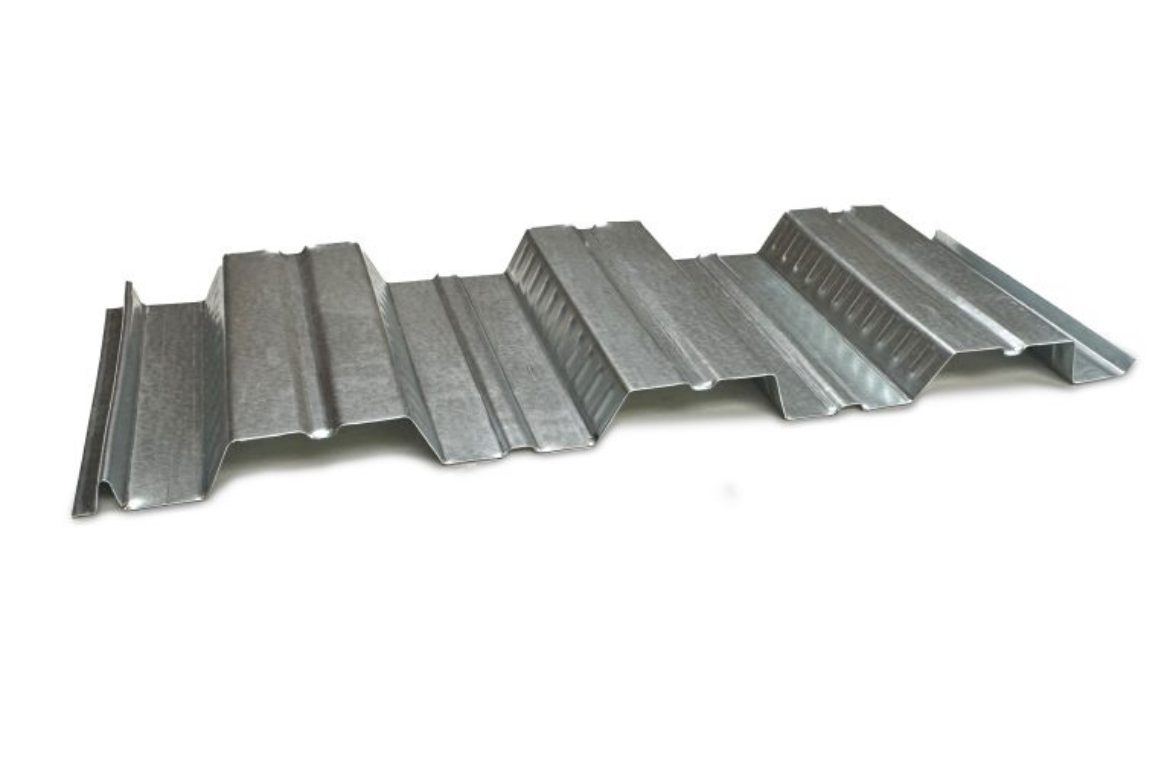
B Deck Explained: Profile, Applications, and Design Use
B-Deck is one of the most commonly specified steel deck profiles in commercial construction, but it’s also one of the most misunderstood. In my conversation with Ryan from Marlyn Steel Decks, he explained why B-Deck is used so often, where it performs best, and why it isn’t always the right choice for every project.
Even though it’s widely used, B-Deck still has limits. Knowing what it’s designed to do—and what it’s not—can prevent costly mistakes later.
B-Deck is typically used by engineers, contractors, and building owners working on projects with shorter or intermediate spans where a deeper deck isn’t required. As Ryan explained, it’s the most common choice for standard roof applications and repair work, especially when matching existing decking in older buildings. When span and load requirements fall within its limits, B-Deck provides a practical and economical solution.
What B-Deck Is Designed to Do
Ryan explained that B-Deck is typically an inch-and-a-half-deep profile designed to span between joists or beams and act as a structural platform. Its job is to support the materials above it, not to act as a finished surface.
Because of its profile depth and shape, B-Deck works best when spans are relatively short to moderate. This makes it a practical option for many roof applications where the structural spacing doesn’t demand a deeper deck.
Why B-Deck Is Used So Often
According to Ryan, “probably 75% of the time it’s going to be a B-Deck or one of the similar inch-and-a-half roof decks.” That’s a significant percentage, and it highlights just how common this profile is across the industry.
B-Deck is often chosen because:
- It meets the needs of many standard roof designs
- It’s widely available
- It’s economical compared to deeper profiles
- It’s familiar to engineers, contractors, and installers
In many cases, B-Deck becomes the default option simply because it fits the span and load requirements without overengineering the system.
Typical Applications for B-Deck
Ryan noted that B-Deck is frequently used for:
- Shorter span roof areas
- Intermediate span conditions
- Roof repairs and patch work
- Projects where new deck must match existing material
On older buildings, B-Deck is often specified so the new work ties cleanly into decking that’s already in place. Instead of replacing large sections of roof deck, crews can patch or repair areas while maintaining consistency in the structure.
B-Deck is installed by spanning the panels across steel joists or beams and fastening them in place according to the project’s engineered specifications. Once secured, it serves as a structural platform for the roof system, supporting insulation boards and the roofing membrane installed above it. The exact fastening pattern and spacing are determined by the engineer of record based on span, load, and wind requirements.
Understanding B-Deck Span Limitations
While B-Deck is versatile, Ryan was clear that it isn’t designed for every situation. As spans increase, the deck’s load-carrying capacity decreases. Once projects push into longer spans—often approaching ten feet—B-Deck may no longer be suitable.
At that point, engineers typically look at deeper profiles rather than trying to force B-Deck to do more than it was designed to handle. This is where projects often transition to profiles like N-Deck instead.
Gauge Thickness vs. Profile Depth
Ryan also explained that simply increasing the gauge of B-Deck isn’t always the best solution. While a heavier gauge can improve strength, it may still fall short if the span exceeds the deck’s practical limits.
In some cases, switching to a deeper profile is more efficient and cost-effective than increasing gauge thickness. That’s why engineers rely on load tables rather than assumptions when specifying deck.
When B-Deck Is Not the Right Choice
Ryan shared examples where customers wanted to use B-Deck even though the span clearly called for something stronger. In those situations, Marlyn advises customers to double-check the plans with the engineer of record.
Using the wrong deck profile can lead to performance issues, inspection failures, or costly rework. Catching those issues early—before material is ordered—saves time and money.
How B-Deck Fits Into Roof Systems
B-Deck is commonly used as the base layer in roof decks, supporting insulation boards and roofing membranes above. Once installed, it becomes part of a layered system designed to handle structural loads, weather exposure, and long-term performance.
Ryan emphasized that while B-Deck plays a critical role, it’s only one component of the overall roof assembly. Its performance depends on proper specification, installation, and integration with the rest of the system.
Choosing B-Deck With Confidence
B-Deck remains one of the most widely used profiles because it works well for many applications. The key is knowing when it’s the right fit—and when a deeper profile is required.
If you’re reviewing plans or confirming specifications, Marlyn can help evaluate whether b deck is appropriate for your project and how it integrates into complete roof decks based on span, load, and design intent.
Leave A Comment