- Hablamos Español

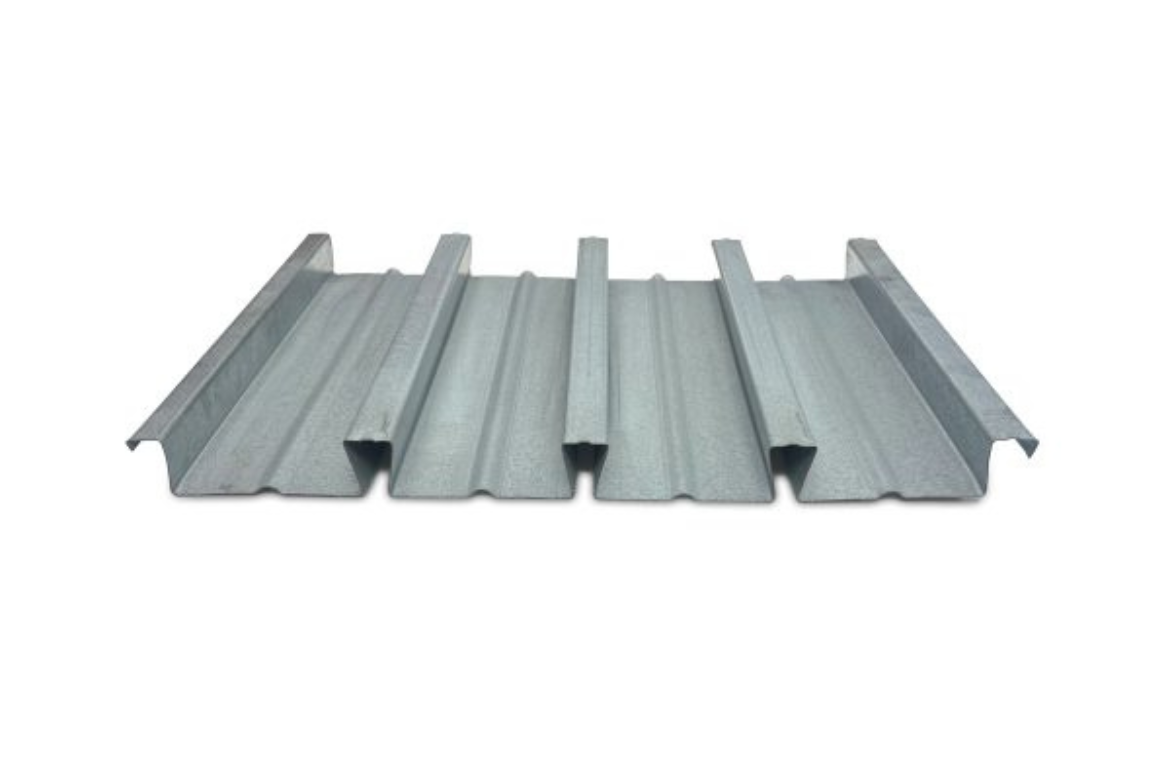
Dovetail Deck (Marcore): How Architectural Steel Deck Systems Are Used
When people hear the term dovetail deck, they often think it’s just another variation of steel deck. In reality, dovetail deck, specifically Marcore, is a very different system, both in how it performs structurally and how it looks once installed. I usually explain that Marcore isn’t chosen just for strength; it’s chosen when performance and appearance both matter.
From a system standpoint, dovetail deck is designed to function as a composite deck, but its shape and profile give it characteristics that standard composite decks don’t have.
What Makes Dovetail Deck Different
The name comes from the shape of the deck itself. Instead of traditional ribs, dovetail deck panels are formed with dovetail-shaped flutes. That shape is what allows the deck to act compositely with the concrete.
As concrete is poured and cures, it locks into those dovetail shapes. That mechanical bond creates composite action without relying solely on embossments, which is different from many standard composite deck profiles.
How Marcore Functions Structurally
From a structural standpoint, Marcore acts as a composite floor system. Once the concrete cures, the deck and slab work together to carry loads over the life of the building.
The dovetail shape provides:
- Natural composite action
- Strong concrete-to-steel bonding
- Reliable long-term performance
Because of this, Marcore is often selected for low- to mid-rise buildings where composite action is required.
Where Dovetail Deck Is Commonly Used
In my experience, Marcore is frequently used in:
- Single-family residences
- Condominiums
- Hotels
- Commercial buildings
- Industrial facilities
It’s a system that works well when designers want composite performance without sacrificing aesthetics.
The Architectural Advantage
One of the biggest reasons architects specify Marcore is its finished appearance. When the deck is exposed, it has a clean, linear, plank-like look that standard deck profiles don’t offer.
That architectural appeal makes it a popular choice in areas like:
- Building lobbies
- Entryways
- Exposed ceilings
- Public-facing spaces
In many projects, we’ll see a standard composite deck used throughout most of the building, while Marcore is used only in visible areas where appearance matters.
How Marcore Differs From Standard Composite Deck
Although both systems provide composite action, they aren’t interchangeable. Marcore’s dovetail shape changes how the deck bonds with concrete and how it looks once installed, influencing how loads are transferred through the slab.
Standard composite deck relies primarily on embossments for bonding, while Marcore relies on the physical shape of the deck itself to create that connection.
That difference affects both performance and aesthetics, especially in applications where the deck remains exposed after construction.
Installation Considerations
One important thing to understand about a dovetail deck is that it cannot be overlapped at the ends. Each panel must butt directly against the next.
This means:
- Accurate measurements are critical
- Panels must be ordered to the correct lengths
- Field adjustments are limited
At the edges of the deck, girder fillers are used to close gaps rather than overlapping panels.
Accessories Used With Dovetail Deck
Like other deck systems, Marcore uses accessories to complete the installation. These include fillers and closures that finish off the edges and ensure the system performs as intended, particularly at transitions and perimeter conditions.
These components are important for both structural integrity and finished appearance, helping maintain clean lines while supporting proper load transfer and concrete placement.
How Marcore Is Used as a Floor System
From a functional standpoint, Marcore acts as a floor deck that supports wet concrete during the pour and becomes part of the finished structural system after curing.
Unlike non-composite systems, the deck is not just a temporary form. It remains a working part of the slab, contributing to load capacity and system performance.
This is why it’s critical that Marcore be specified intentionally and installed according to design.
Why Engineers and Architects Choose Marcore
Marcore is often selected when a project needs:
- Composite structural performance
- Clean architectural appearance
- Exposed ceiling aesthetics
- Reliable long-term durability
It’s not about replacing standard deck everywhere, it’s about using the right system in the right place.
Avoiding Common Mistakes
One mistake I see is treating a dovetail deck like a standard deck during ordering or layout. Because it doesn’t overlap, small measurement errors can create big issues in the field.
That’s why it’s important to review plans carefully and confirm dimensions before ordering.
Matching the System to the Design Intent
The biggest takeaway with Marcore is that it serves both a structural and architectural purpose. It’s a composite system first, but its appearance makes it stand out from other options.
When used correctly, a dovetail deck provides strength, durability, and a finished look that standard systems can’t match.
Understanding how and where to use a floor deck like Marcore helps ensure the system performs as designed and delivers the visual impact architects are looking for, while still meeting structural requirements.
Leave A Comment