- Hablamos Español

The Role of Steel Floor Decks in Multi-Story Construction
When it comes to multi-story construction, steel floor decks play a critical role in how a building comes together from one level to the next. I often explain that each floor isn’t just a surface; it’s part of a continuous structural system that supports everything above it.
A steel floor deck provides the base for each level, allowing concrete slabs to be poured efficiently while maintaining structural consistency throughout the building.
How Floor Deck Fits Into Multi-Story Design
In multi-story buildings, the deck installed on one level becomes the ceiling of the space below and the floor of the space above. This means each floor deck must be designed to carry its own loads while supporting future construction as the building goes up.
That continuous stacking of floors is why floor deck selection matters so much early in the design process.
Supporting Concrete During Construction
One of the primary roles of floor deck is to support the weight of wet concrete during the pour. At this stage, the deck must be strong enough to handle not only the concrete itself, but also the temporary demands of active construction, when loads are at their highest and the slab has not yet gained strength. At this stage, the deck must be strong enough to handle:
- The weight of the concrete
- Construction equipment
- Temporary loads from workers and materials
Once the concrete cures, the system transitions into its long-term role.
What Happens After the Concrete Cures
After curing, the way the deck functions depends on how it was specified. In many multi-story buildings, the deck is designed to work compositely with the concrete slab, allowing both materials to share structural responsibility.
This means the deck doesn’t just stay in place; it becomes part of the structure itself, contributing to load transfer and long-term performance throughout the life of the building.
Why Composite Action Matters in Tall Structures
Composite action allows the steel and concrete to share loads, which is especially important in multi-story construction where demands compound with each additional level. As buildings get taller, loads increase, and floor systems must perform reliably over time without excessive deflection or stress.
That’s why composite systems are commonly used in these applications, providing consistent structural performance across multiple floors.
How Composite Floor Deck Improves Performance
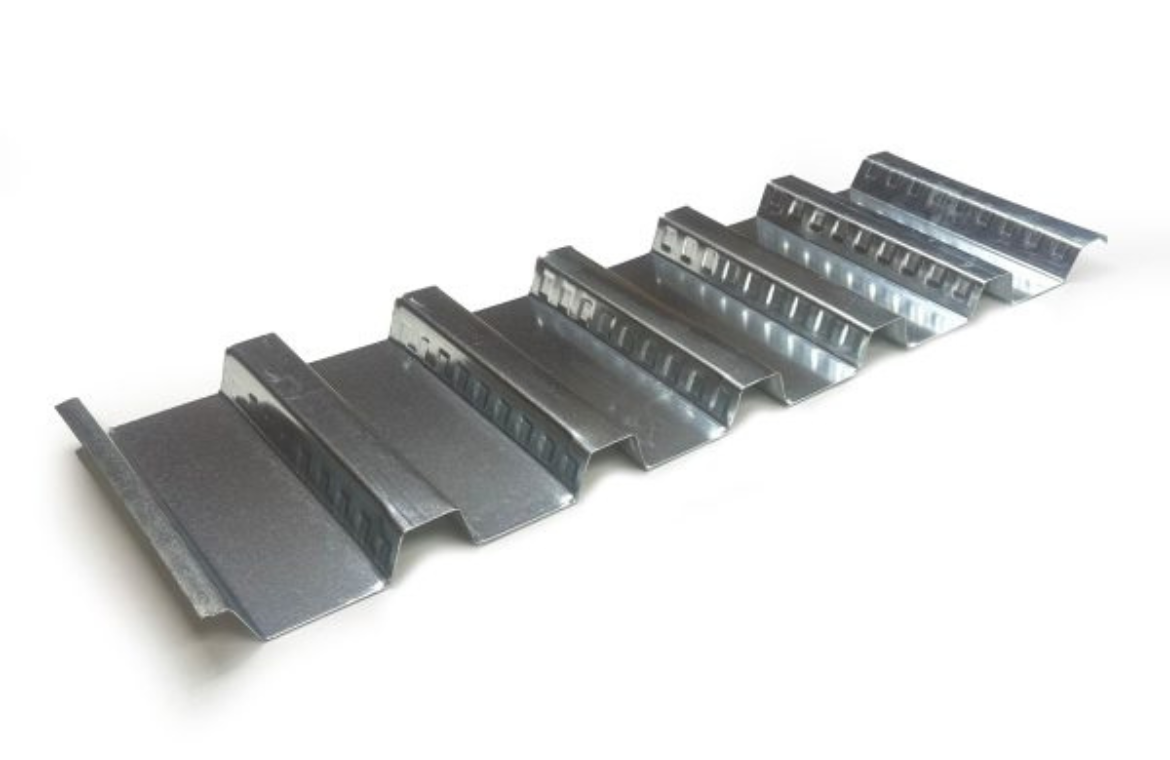
A composite floor deck includes formed shapes or embossments that allow concrete to bond with the steel. As the concrete cures, it locks into the deck profile, creating a composite system.
This approach:
- Improves load distribution
- Increases structural efficiency
- Supports long-term performance
In multi-story buildings, consistency from floor to floor is essential.
Repetition and Consistency Across Floors
One advantage of steel floor deck systems is repeatability. Once the deck system is designed for one level, it can often be repeated across multiple floors with minimal variation, allowing the structure to maintain consistency as construction progresses.
This repeatable approach simplifies planning, reduces design changes between levels, and helps keep multi-story projects moving efficiently.
This consistency:
- Speeds up construction
- Reduces layout errors
- Simplifies coordination between trades
It also allows engineers to design predictable, reliable systems throughout the building.
Load Considerations in Multi-Story Buildings
As each floor is added, loads accumulate. Floor deck systems must account for:
- Live loads
- Dead loads
- Long-term occupancy
- Equipment loads
The deck selection, gauge, and profile all factor into how those loads are carried from one level to the next.
Why Floor Deck Choice Can’t Be an Afterthought
I’ve seen issues arise when floor deck is treated as a commodity instead of a system component. In multi-story construction, small decisions can have big consequences later, especially when those choices affect how loads are transferred from one level to the next.
Treating the deck as part of a coordinated system helps prevent problems that may not appear until multiple floors are already in place.
Incorrect deck selection can lead to:
- Redesigns
- Inspection issues
- Construction delays
- Increased costs
Confirming the correct system early helps prevent these problems.
How Engineers Determine the Right System
Engineers evaluate floor deck systems using load tables that reflect how the deck and concrete will work together. These calculations are based on span lengths, slab thickness, and expected loads.
That’s why floor deck selection should always align with the engineer’s intent.
Long-Term Durability and Performance
Steel floor deck systems are designed for longevity. Once installed and integrated into the building, they’re protected from the elements and not subject to issues like rot or pests.
This makes steel deck a reliable choice for multi-story structures where long-term performance matters.
Matching the Deck to the Building
The key takeaway is that floor decks are more than just temporary forms. In multi-story construction, they become a permanent part of the structure, supporting each level above.
When a project requires long-term structural performance and consistency across multiple levels, a composite floor deck is often the right solution. Understanding when and where to use a composite floor deck helps ensure the building performs as designed and avoids problems as construction progresses.
Leave A Comment